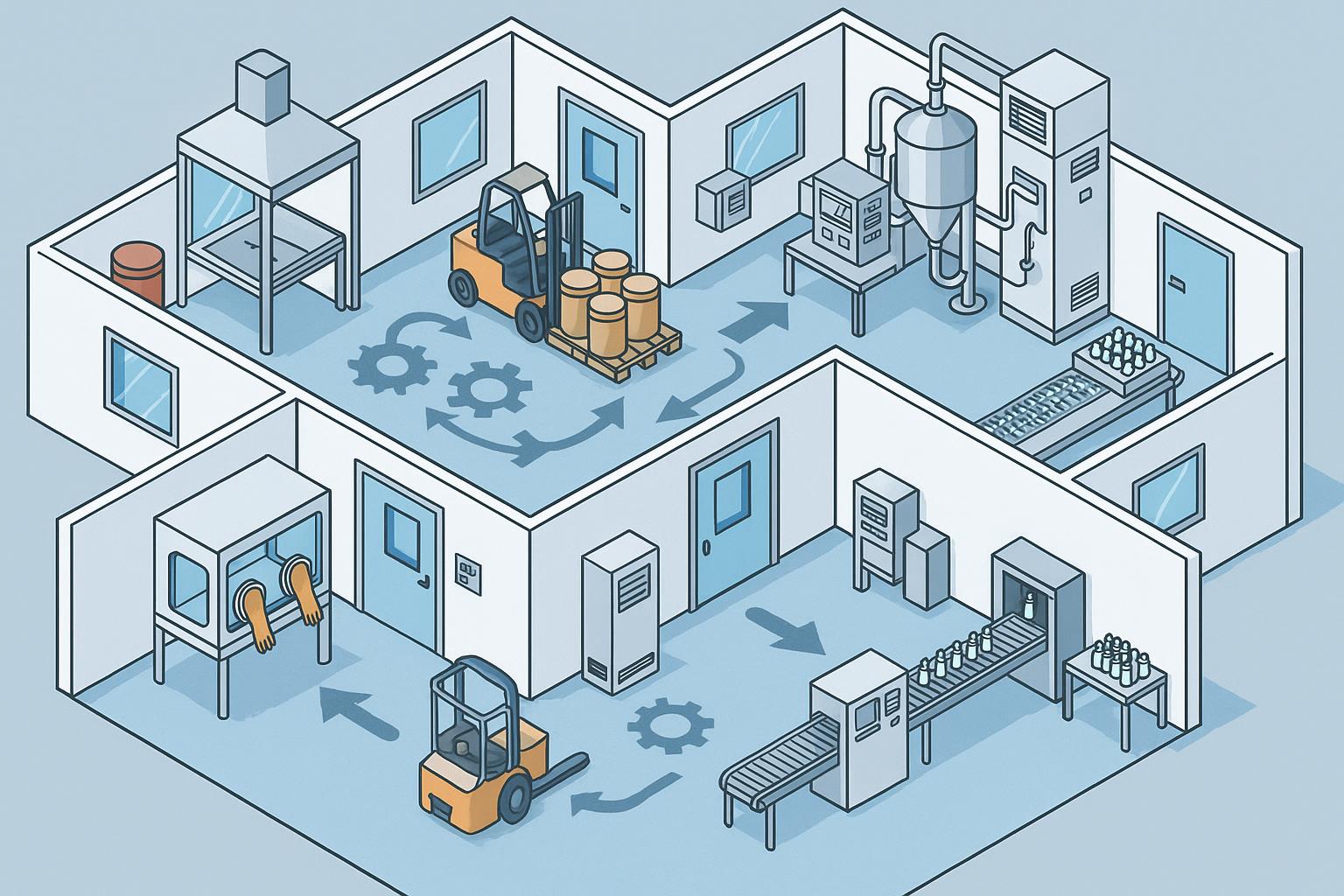
Many pharmaceutical manufacturers begin a cleanroom project by asking about room size, panel material, or ISO class. These are important details, but they should not be the first decisions. A successful pharmaceutical cleanroom should be planned around the actual production process: how people enter, how materials move, where products are exposed, how waste leaves, and how the room will be cleaned, monitored, and validated.
A cleanroom for pharmaceutical use is not simply a cleaner version of a normal workshop. It is a controlled environment designed to reduce contamination risk during sensitive manufacturing activities. This is why early planning is so important. If the process flow is unclear, the cleanroom may look complete after construction but become difficult to operate in daily production.
One of the most common mistakes is treating layout as a construction issue instead of a contamination-control issue. In pharmaceutical production, people, raw materials, packaging components, tools, semi-finished goods, finished products, and waste should not move through the facility randomly. Each route should support a logical flow from lower-control areas to higher-control areas where necessary.
This is where a gmp cleanroom requires more careful thinking than a general industrial cleanroom. GMP is not only about clean air. It also involves documented procedures, controlled access, cleaning routines, monitoring records, maintenance planning, and repeatable production behavior. A room that is difficult for operators to use correctly will create long-term compliance and quality risks.
Pressure control is another critical part of pharmaceutical cleanroom planning. Many cleanrooms use a pressure cascade to protect cleaner areas from surrounding contamination. But pressure stability depends on more than HVAC air volume. Door locations, airlocks, return air design, room leakage, pass-through equipment, and operator behavior can all affect the pressure relationship between rooms.
Filtration also needs to be understood as part of the whole system. HEPA or ULPA filters are essential in many pharmaceutical environments, but installing high-efficiency filters alone does not guarantee cleanroom performance. The filter housing, ceiling system, sealing method, air distribution, leakage testing, and maintenance access all influence whether the room can meet its intended performance level.
Another practical issue is material selection. Cleanroom walls, ceilings, doors, windows, and floors should be smooth, sealed, durable, and easy to clean. Corners, joints, wall-floor connections, service openings, and door frames can become weak points if they are not designed carefully. In pharmaceutical production, materials must support cleaning and disinfection over the long term, not just look good at handover.
The phrase cleanroom gmp is often searched by companies trying to understand how cleanroom construction connects with GMP expectations. The important point is that GMP should influence the project before installation begins. If validation, monitoring, pressure control, and cleaning requirements are considered only after construction, the project may face expensive adjustments later.
A better approach is to begin with a contamination-control strategy. Which process steps are critical? Which rooms need higher protection? Where should airlocks be placed? How will personnel gowning be managed? How will materials enter the clean area? Which tests will be required during commissioning? These questions help convert a cleanroom from a physical space into a reliable production system.
In the end, a pharmaceutical cleanroom should make correct operation easier, not harder. When room zoning, airflow, pressure, filtration, materials, and GMP procedures are planned together, the cleanroom becomes more than a construction project. It becomes a long-term quality asset for pharmaceutical manufacturing.