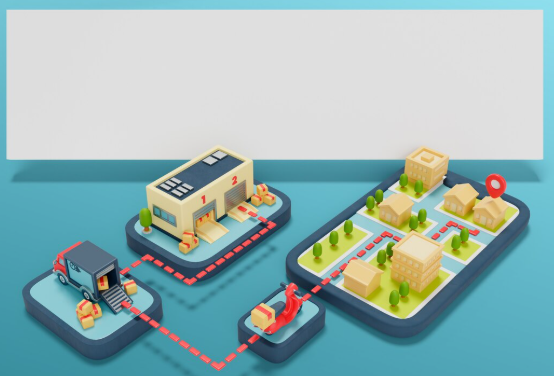
What enables logistics companies to monitor vehicles, shipments and warehouse operations without delays? Real-time tracking has become a core requirement for modern supply chains. Transport operators rely on uninterrupted connectivity to exchange location data, delivery updates and operational information across multiple locations.
Stable enterprise-grade connectivity supports accurate tracking, faster decision-making and improved service quality. An internet leased line connection provides the dedicated bandwidth required for logistics networks that depend on continuous communication throughout daily operations.
Real-Time Tracking in Logistics Powered by Reliable Internet Leased Line Connectivity
Internet Leased Line connectivity supports real-time logistics operations by enabling continuous data exchange across fleets, warehouses and transport networks.
Continuous Data Exchange Across Fleet Operations
Real-time tracking relies on constant communication between vehicles, warehouses, distribution centres and control rooms. Every location update, route change and delivery confirmation travels through a business network. Any interruption may delay operational decisions and affect customer commitments.
An internet leased line connection supports uninterrupted communication through dedicated bandwidth. Unlike shared broadband services, it delivers consistent upload and download speeds, making it suitable for logistics businesses handling large volumes of operational data.
Faster Coordination Between Multiple Locations
Large logistics companies operate through interconnected branches, fulfilment centres and transport hubs. Every site exchanges operational information throughout the day.
Main business functions supported by reliable connectivity:
- Live vehicle tracking
- Warehouse inventory synchronisation
- Route optimisation
- Delivery confirmation updates
- Driver communication
- Customer notification systems
Stable connectivity helps every department work from updated operational data rather than delayed information.
Supporting IoT Devices Across Transport Networks
Modern logistics operations rely on connected devices that continuously transmit information. GPS trackers, temperature sensors, fuel monitoring systems and vehicle diagnostics generate data every second.
A dedicated enterprise network supports these connected systems without performance fluctuations. This enables operations teams to monitor fleet conditions from a central platform.
Business Benefits of Dedicated Enterprise Connectivity
Reliable enterprise connectivity supports faster decision-making by enabling continuous communication across critical logistics functions and operational locations.
| Logistics Requirement | Enterprise Connectivity Benefit |
| Vehicle monitoring | Continuous location updates |
| Warehouse management | Faster data synchronisation |
| Route optimisation | Low-latency communication |
| Fleet monitoring | Stable IoT connectivity |
| Delivery tracking | Real-time customer visibility |
| Multi-site operations | Reliable inter-office communication |
Supporting Large-Scale Logistics Operations
Business expansion increases network demand. Additional warehouses, transport routes and connected devices generate higher traffic across enterprise systems.
Many organisations adopt dedicated internet access to maintain stable performance during business growth. Dedicated bandwidth supports increasing operational workloads while maintaining consistent network quality across locations.
A suitable enterprise solution such as Airtel Internet Leased Line can support logistics organisations requiring reliable connectivity for high-volume operational environments. Its dedicated bandwidth and enterprise-grade service align with businesses that depend on continuous data exchange.
Business Advantages Beyond Real-Time Vehicle Tracking
Reliable connectivity contributes to several operational improvements beyond fleet visibility. Every connected application depends on stable network performance.
Major advantages include:
- Faster dispatch planning
- Improved warehouse coordination
- Better communication between regional offices
- Quicker document transfers
- Stable cloud application performance
- Reduced network congestion
An internet leased line connection supports these business functions through dedicated connectivity designed for enterprise workloads.
Supporting Cloud-Based Logistics Platforms
Many logistics companies operate cloud-based transport management systems, warehouse management platforms and analytics tools. These applications process operational information throughout the working day.
A stable network allows employees to access cloud resources with consistent performance. This supports faster operational decisions and better visibility across supply chain activities.
Businesses seeking enterprise-grade connectivity may evaluate Airtel Dedicated Internet Access for cloud-driven logistics environments where consistent bandwidth supports critical business applications.
Data Security and Business Continuity
Logistics organisations exchange shipment details, customer information, invoices and operational reports every day. Secure connectivity supports business continuity by reducing exposure to network instability associated with shared internet services.
Many enterprises also combine dedicated internet access with additional security services such as managed firewalls and DDoS protection to strengthen network resilience.
Selecting Enterprise Connectivity for Modern Logistics Networks
Choosing enterprise connectivity requires evaluation of present operations and future expansion plans. Business requirements vary according to fleet size, warehouse locations and technology adoption.
Important evaluation factors:
- Dedicated bandwidth availability
- Service Level Agreement (SLA)
- Network uptime
- Scalability
- Low latency
- Enterprise technical support
- Security capabilities
These factors influence overall network performance across logistics operations.
Connectivity Comparison
Comparing enterprise leased lines with shared broadband highlights the advantages of dedicated connectivity for data-intensive logistics operations.
| Feature | Shared Broadband | Enterprise Leased Line |
| Bandwidth | Shared | Dedicated |
| Upload speed | Variable | Symmetrical |
| Performance consistency | Moderate | High |
| Suitable for real-time tracking | Limited | Yes |
| Business scalability | Moderate | High |
As logistics operations expand, network reliability becomes increasingly important. Many enterprises adopt an internet leased line connection to support growing digital infrastructure while maintaining consistent operational performance.
Solutions such as Airtel Internet Leased Line align with organisations requiring dependable enterprise connectivity for fleet management, warehouse systems and cloud-based logistics platforms.
Moving Towards Intelligent Logistics Operations
Artificial intelligence, predictive analytics and connected transport technologies continue to reshape logistics. These technologies rely on uninterrupted connectivity to process operational information quickly.
Many enterprises therefore consider dedicated internet access as a core component of digital logistics infrastructure, supporting continuous communication across vehicles, warehouses and enterprise applications.
Building a Connected Future for Logistics
Real-time tracking has become a business necessity rather than an operational enhancement. Reliable enterprise connectivity supports faster fleet visibility, stronger warehouse coordination and better customer communication. An internet leased line connection provides the dedicated bandwidth required for uninterrupted logistics operations.
Organisations planning digital supply chain growth can consider Airtel Internet Leased Line to support reliable connectivity, strengthen operational performance and build a future-ready logistics network.