Caleb Fort is a healthcare executive and civic leader based in Winston-Salem, North Carolina, with decades of experience across healthcare and distribution. He has served as president of QMX Mobile Health since 2014, leading the company’s mobile imaging and diagnostic services for long-term care and residential patients throughout the Carolinas, and collaborating with operations leadership to support radiographers and sonographers delivering care around the clock. Earlier in his career, Fort served as co-chairman of The Merit Group, Inc., a supplier to the residential and commercial paint industry, where he played a key role in guiding growth, managing banking relationships, and identifying acquisition opportunities. He began his career at DuBard, Inc., as principal and sales manager overseeing sales strategy for an Anheuser-Busch distributor. Fort is also a member of professional organizations including the American Portable Diagnostics Association and the North Carolina Directors of Nursing Association, and he has demonstrated a long-standing commitment to volunteer leadership across several civic and educational organizations.
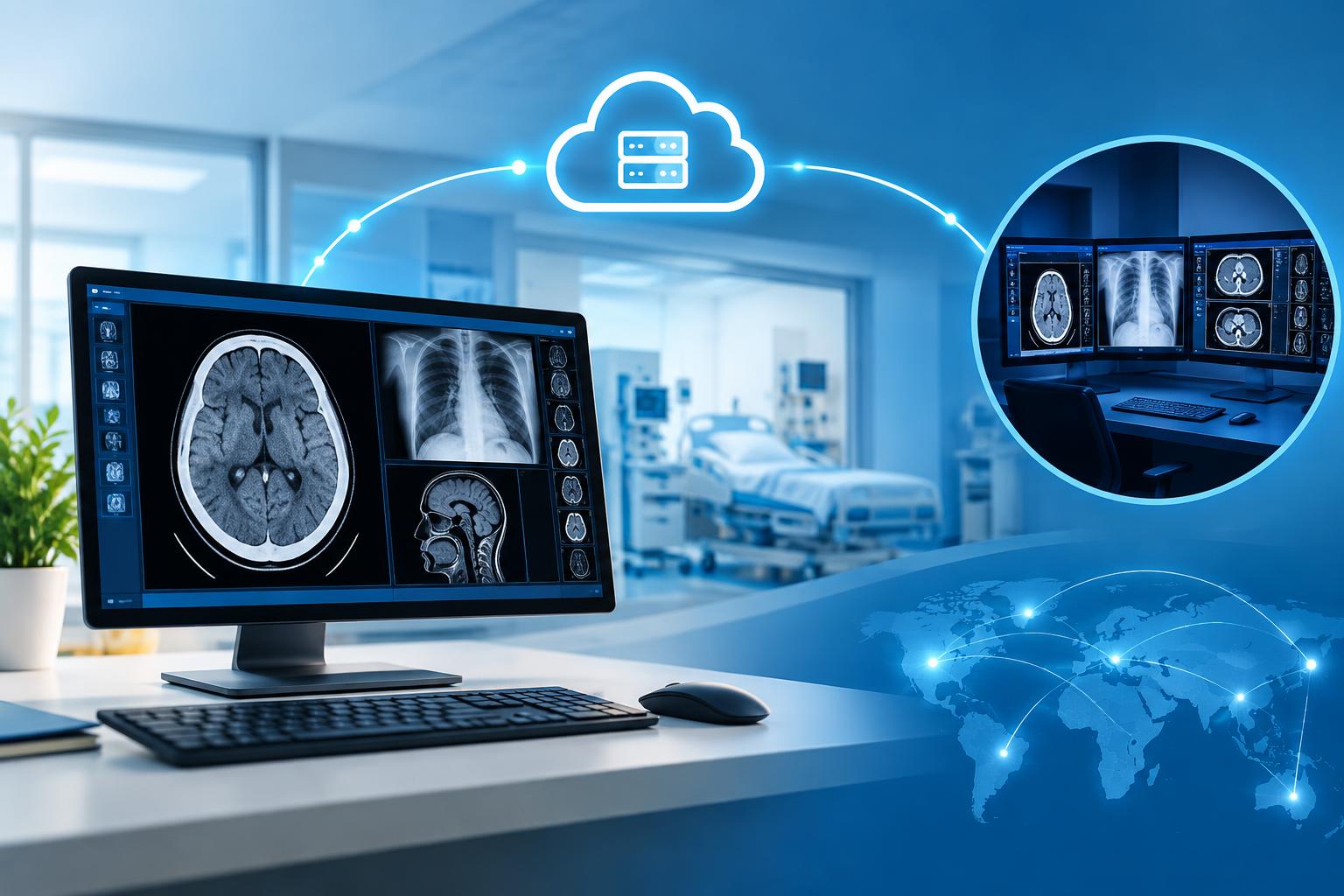
Teleradiology is a modern healthcare technology that uses the internet to transfer and view digitized radiological images. It moves X-rays, magnetic resonance imaging (MRI), and computed tomography (CT) scans among radiologists, surgeons, doctors, and other healthcare providers across different locations, making the process independent of the patient’s treatment location. Instead of waiting for an on-site radiologist at a healthcare facility, the data moves to them, enabling much faster collaboration among healthcare professionals worldwide.
For teleradiology to function effectively, a few essential components must be in place. At the point of care, hospitals and clinics require a robust digital imaging system to capture high-quality medical scans. A dedicated network, powered by a reliable, high-speed internet connection, transmits the images.
On the receiving end, the specialist radiologist uses a sophisticated workstation equipped with medical-grade, high-resolution screens to ensure every detail is visible for accurate scan interpretation. Governing this entire technical ecosystem is a strict framework of data privacy and cybersecurity protocols, such as the Health Insurance Portability and Accountability Act (HIPAA) in the United States, which ensures that sensitive patient information remains protected during its digital journey.
The operational flow of teleradiology is remarkably straightforward and efficient. Once a patient completes their medical scan, the data uploads to a secure server and routed to a radiologist. Because the system is digital, the specialist radiologist can serve in a different city, country, or even an entirely different time zone.
The specialist carefully reviews the high-definition images in tandem with the patient’s clinical history to produce an exhaustive diagnostic report. Within hours, or sometimes even minutes, the expert analysis returns to the attending caregivers, who review it and use the findings to decide on the best course of treatment.
One of the primary advantages of teleradiology is that it directly addresses the well-documented global shortage of qualified radiologists. Because these experts can provide reporting and analysis remotely, regions with few or no local specialists, such as radiologists, can access world-class medical knowledge, such as rural or underserved clinics that otherwise would not have a radiologist on staff.
Expanded healthcare access often leads to accurate diagnoses and faster treatment times that were impossible just a few decades ago, ensuring that a patient’s location doesn’t limit the quality of the care they receive.
Beyond simply filling coverage gaps, teleradiology provides a vital “always-on” safety net for the medical community by guaranteeing 24/7 availability of radiology services. Healthcare providers are no longer limited to in-house staff during regular working hours, as remote specialists can step in to handle cases overnight, on weekends, or during holidays.
This around-the-clock support also ensures patients receive timely diagnoses at any hour and eases the workload for in-house radiologists. As a result, on-location teams can focus more effectively on patient care during standard hours, while facilities maintain consistent service levels at all times.
Finally, the economic benefits of teleradiology make high-level care more sustainable for smaller practices and community hospitals. Maintaining a full-time on-site radiology department is an enormous financial undertaking that many private practices cannot justify, especially if their scan volume fluctuates.
Teleradiology allows these facilities to transition to a scalable model where they pay for expert interpretations on an as-needed basis. By opting for a per-scan service model, healthcare providers can drastically reduce their overhead costs while still maintaining a high standard of diagnostic accuracy.
These savings stretch down the line, eventually contributing to a more affordable and efficient healthcare experience for the patient.
About Caleb Fort
Caleb Fort is a healthcare executive based in Winston-Salem, North Carolina, who has served as president of QMX Mobile Health since 2014, overseeing mobile imaging and diagnostic services for long-term care and residential patients. He previously served as co-chairman of The Merit Group, Inc., and began his career at DuBard, Inc. A graduate of the University of South Carolina, Fort has volunteered extensively, including service on the board of the South Carolina Governor’s School for Science and Math Foundation and as chairman of the board of trustees for Coker College.