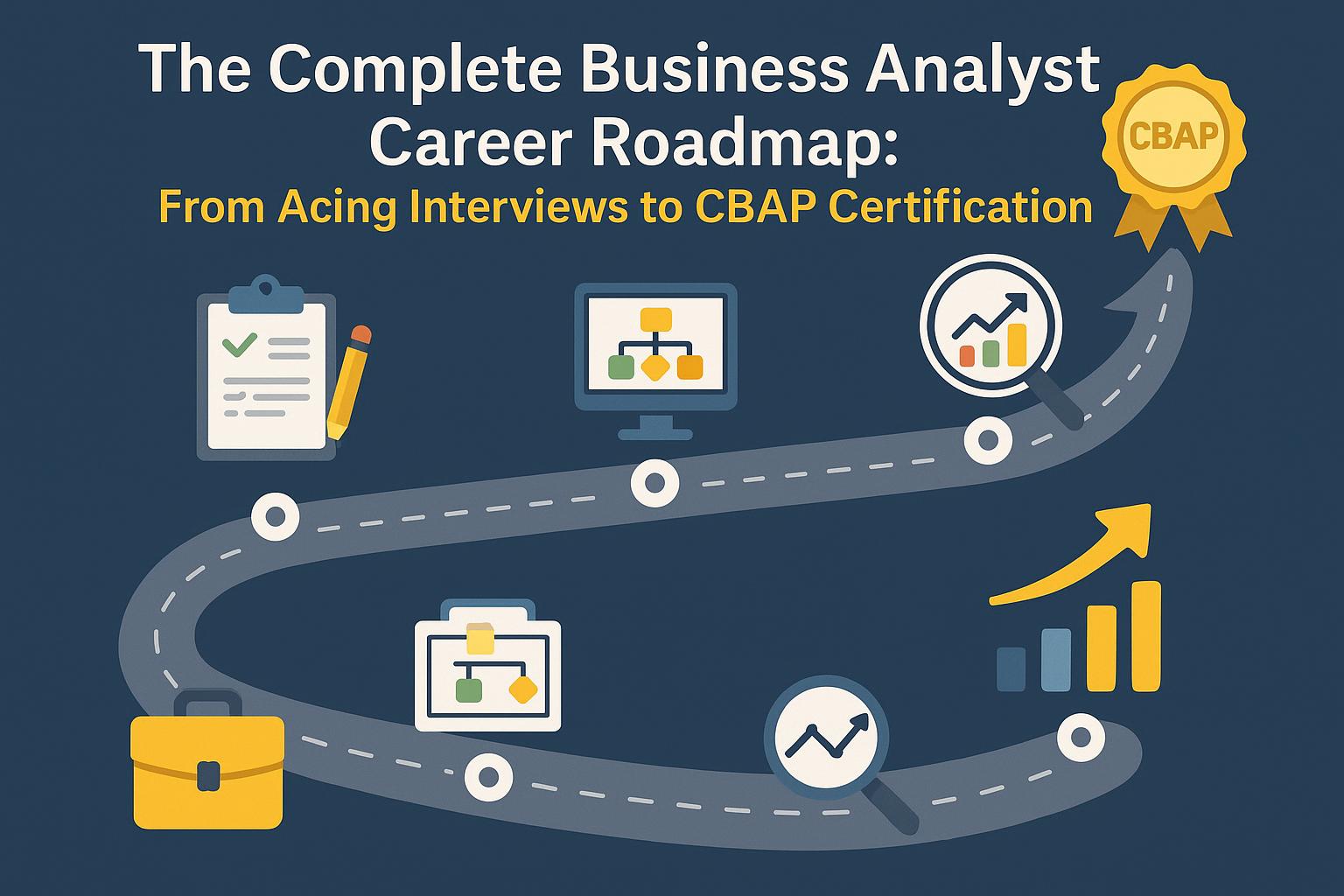
The demand for skilled Business Analysts has hit a fever pitch in 2026. As digital transformation projects move from optional experiments to core survival strategies for major corporations, the need for professionals who can translate complex data into actionable business strategies is higher than ever. Companies are no longer just looking for someone who can write requirements; they need strategic partners who can navigate change and drive value.
However, a career in business analysis is a journey rather than a single destination. It is a progression that begins with breaking into the industry and evolves into mastering the craft through standardized global frameworks. Many eager professionals enter the field thinking technical skills alone will carry them through, only to hit a ceiling five years down the road.
This guide outlines a definitive roadmap for your career. We will look at the specific phases of professional development, starting with the challenge of landing your first role and navigating the interview process, moving through the growth phase of delivering value, and finally arriving at the expert stage where certification validates your authority. Whether you are a fresh graduate or a mid-level professional feeling stuck, this path will clarify your next steps.
Phase 1: The Foundation – Getting Your Foot in the Door
The first phase of your career is arguably the most difficult because you have to prove potential rather than track record. Entry-level Business Analysts are not expected to know everything, but they are expected to possess a specific toolkit.
The Essential Skill Set
In 2026, the baseline for entry has shifted. Proficiency in Microsoft Excel and basic documentation is now considered the bare minimum. Today, hiring managers look for a blend of soft and hard skills.
- Communication: You must be able to speak the language of both developers and stakeholders. This is not just about being articulate; it is about active listening and asking the right questions.
- Technical Basics: Familiarity with SQL for data retrieval and understanding the basics of cloud platforms (like AWS or Azure) helps you stand out.
- Documentation: Knowing how to write clear User Stories and acceptance criteria is vital.
The Hiring Hurdle
Getting the interview is one thing, but passing it is another. The biggest mistake aspiring analysts make is over-preparing for technical definitions while under-preparing for behavioral inquiries. Hiring managers want to know how you think. They will ask you to describe how you handle conflict, how you manage changing requirements, or how you prioritize features when resources are tight.
You cannot simply wing these responses. You need to study specific scenarios and practice the STAR method (Situation, Task, Action, Result) to keep your answers focused. If you go into an interview without having thought through these situations, you will likely stumble when asked to describe a time you failed or had to manage a difficult client.
Preparation is your strongest asset here. Most candidates fail because they focus only on tools or definitions. To succeed, you must practice scenario-based inquiries. Reviewing a comprehensive list of Business Analyst Interview Questions will help you structure your thoughts and impress hiring managers. This preparation allows you to walk into the room with confidence, ready to demonstrate not just what you know, but how you apply that knowledge to solve real business problems.
Phase 2: The Growth Stage – Delivering Value
Once you have secured the job, the learning curve truly begins. This is the “Growth Stage,” typically spanning years two through five of your career. At this point, you are no longer asking how to write a requirement; you are asking if the requirement adds value to the business.
Day-to-Day Responsibilities
In this phase, you become the bridge between the problem and the solution. Your daily routine shifts from passive documentation to active facilitation. You will likely be running requirement gathering workshops, managing backlogs in Jira or Azure DevOps, and acting as the Product Owner’s right hand.
- Stakeholder Management: This is where the job gets real. You will encounter stakeholders who disagree on priorities or want features that are technically impossible within the budget. Your job is to negotiate and find a middle ground without alienating anyone.
- Agile Proficiency: You must move beyond the theory of Agile and Scrum. You need to understand the rhythm of sprints, the importance of retrospectives, and how to keep a development team unblocked.
- Process Modeling: You will spend significant time mapping out “as-is” and “to-be” processes. Visualizing workflows helps uncover inefficiencies that text-based documentation often misses.
The Mid-Level Plateau
After a few years, many Business Analysts hit a plateau. You are good at your job, you know the company inside and out, and you are comfortable. However, comfort can be dangerous. You might notice that while your responsibilities increase, your title and salary do not move as quickly as you would like.
This happens because experience alone is not always enough to jump to the “Senior” or “Lead” salary bracket. Employers assume you can do the job at your current company, but they may question if your skills are transferrable or if you are just accustomed to your current organization’s specific (and perhaps flawed) way of doing things. To break through this ceiling, you need to demonstrate that your expertise follows global standards, not just local habits.
Phase 3: The Expert Stage – Standardization & Authority
The transition from a mid-level Business Analyst to a Senior Consultant or Lead BA requires a shift in mindset. You stop being a contributor and start being a leader. Senior BAs are expected to mentor junior staff, define organizational standards for business analysis, and handle the most high-risk, high-value projects in the portfolio.
Standardization is Key
At this level, “winging it” is not acceptable. Large enterprises and multinational corporations operate on frameworks. They use the BABOK (Business Analysis Body of Knowledge) guide as their bible. They need to know that you understand the standard definitions of tasks, techniques, and competencies.
This is where formal validation becomes the primary differentiator. When a recruiter looks at two resumes with seven years of experience, the one with professional certification stands out immediately. It signals that this person treats their career as a profession, not just a paycheck.
The Gold Standard
While there are various certificates available, the International Institute of Business Analysis (IIBA) offers the most respected credentials in the industry. For senior professionals, validating your experience is crucial for commanding higher billing rates or salaries.
The certification process is rigorous. It requires you to document thousands of hours of hands-on experience and pass an exam that tests your ability to apply business analysis logic to complex scenarios. It is not an easy win, which is exactly why it holds so much weight.
While experience is valuable, global organizations look for standardized expertise. Earning your CBAP Certification validates your skills against international standards and significantly increases your negotiation power for senior roles. It proves you can handle the complexities of enterprise-level analysis and gives you a common language to speak with other experts around the world.
Conclusion
The path from a novice Business Analyst to a recognized industry expert is clear, but it requires deliberate action. It starts with mastering the basics and prepping thoroughly to ace the behavioral interview. It continues through years of hands-on practice, refining your ability to manage stakeholders and deliver agile solutions. Finally, it culminates in standardizing your knowledge through professional certification.
If you are serious about this career, take stock of where you are today. Are you struggling to get past the first round of interviews? Or are you a seasoned pro who is ready to verify your skills with a CBAP? Whatever stage you are in, the tools and resources are available to help you move forward. Don’t wait for the promotion to come to you; build the skills that make the promotion inevitable.