Ronald Hovsepian, CEO of Skillsoft and former CEO of Indigo Ag, has spent decades leading organizations at the intersection of technology, data management, and large-scale operational transformation. During his tenure at Indigo Ag, Ronald Hovsepian oversaw the development and commercialization of the first registry-approved agricultural carbon credits in the United States, enabling farmers to participate in the emerging sustainability credit economy. His background includes executive leadership roles at IBM, Novell, Intralinks, and Ansys, where he guided product innovation, cloud services, and enterprise technology expansion. Mr. Hovsepian is also a co-inventor on five technology patents, including inventions related to secure data exchanges and tokenization methods that support reliable sustainability credit systems. Drawing from this blend of technological expertise and environmental market insight, he provides a clear perspective on how patents help accelerate innovation and strengthen trust in the sustainability credit marketplace.
How Patents Drive Innovation in the Sustainability Credit Market
Some organizations continue their mission of accomplishing a cleaner, more sustainable way of doing business. From renewable energy projects to reforestation efforts, some organizations continue looking for ways to reduce their carbon footprint. Technology has aided the process, and patents have become a driving factor since they protect creators and their innovations.
The market for sustainability credits has grown. The tradable certificates represent verified environmental benefits, such as avoided emissions or carbon capture. These credits help balance out the carbon equation, allowing companies to offset what they cannot eliminate. But as the market grows, so does the need for reliable systems, transparency, and trust.
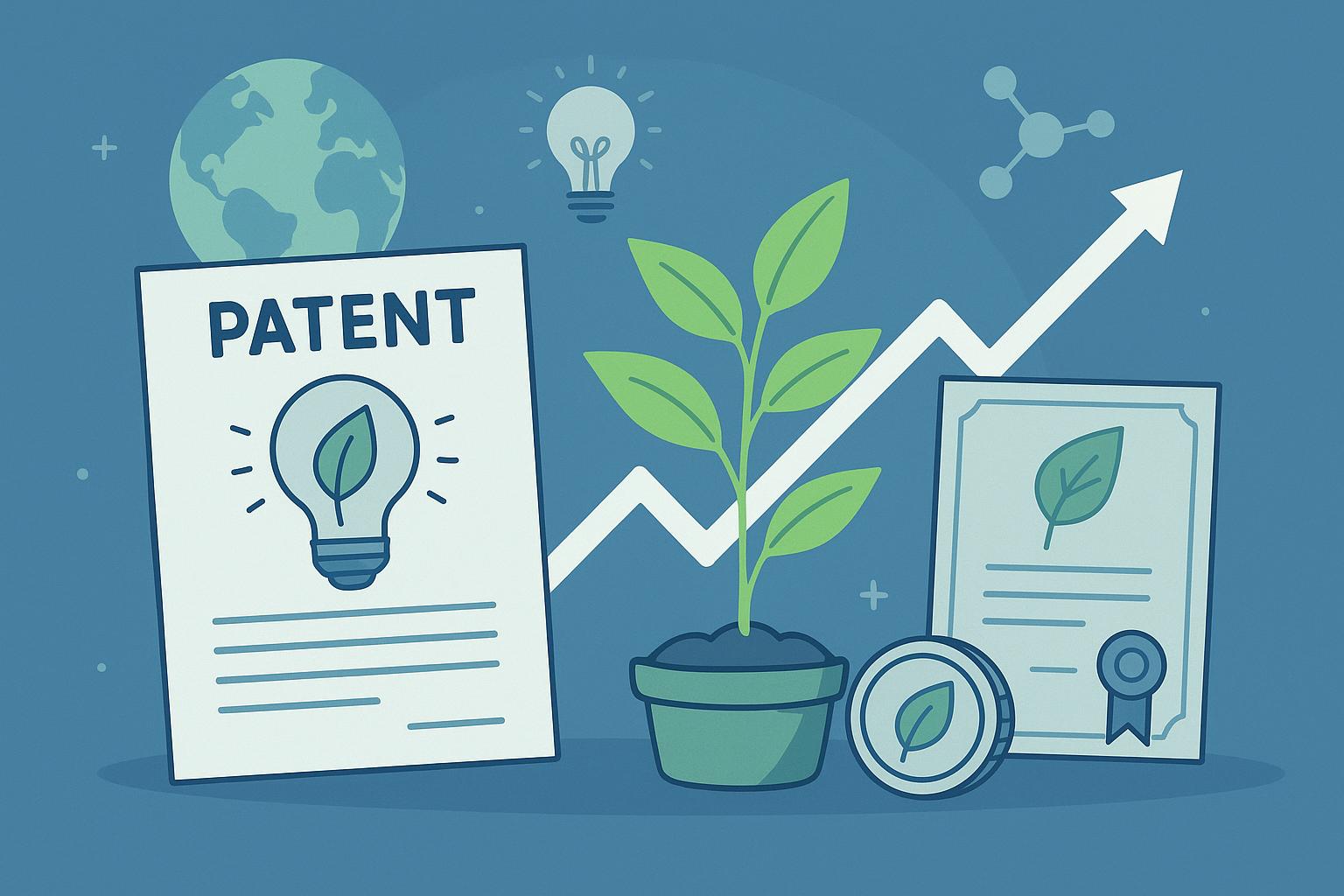
A patent protects a new invention or technology by giving its creator exclusive rights to use and develop it for a certain period of time. In the sustainability credit market, that protection is crucial because the systems that support it are still evolving. Developers are creating new methods to efficiently and securely verify, tokenize, and trade sustainability credits.
Sustainability technologies involve data collection, blockchain tracking, artificial intelligence, and environmental verification processes. Without intellectual property protection, innovators might hesitate to invest the time and money needed to build these advanced systems, fearing their ideas could be copied or commercialized by others.
Patents help secure investment by ensuring ownership for creators, rewarding them for their work. Then, companies can safely share their ideas with partners, regulators, and investors. Protection like this fosters collaboration rather than secrecy, helping to bring new technologies to market faster. In the sustainability credit space, that means more accurate measurement tools, more transparent tracking systems, and more efficient platforms for trading verified credits.
Beyond rewarding innovation, patents also build trust. A patented system signals that a neutral authority has recognized the technology as novel. It adds credibility in an industry that has received criticism for a lack of standardization and oversight.
If a company holds patents for verified methods of sustainability credit management, such as tokenization systems or automated auditing tools, it reassures buyers, sellers, and regulators. It underscores that the creators have developed the underlying technology with rigor and originality.
Moreover, patents help scale the market by laying the groundwork for interoperability and standard-setting. Patented solutions can serve as building blocks for broader systems used across the industry. The balance protects the inventor’s rights while allowing wider adoption. It helps create consistency and reliability in the verification, tracking, and exchange of sustainability credits globally.
The sustainability credit market is still young, but it has the potential to become one of the most powerful tools in addressing climate change. For that to happen, it needs strong, transparent, efficient, and trustworthy technological foundations. Patents are not just legal paperwork; they’re part of the engine driving that innovation forward. They represent a vital bridge between creative problem-solving and the large-scale adoption of technologies that make sustainability measurable and meaningful.
By protecting those who invent better systems for managing environmental assets, patents ensure that progress in sustainability is not only fast but also continuous. It protects them and allows them to share as they make progress.
About Ronald Hovsepian
Ronald Hovsepian is the CEO of Skillsoft and a longtime technology executive whose career includes leading Indigo Ag, Novell, Intralinks, and major global divisions at IBM. He is a co-inventor on multiple patents related to sustainability credit tokenization and secure data systems. Known for guiding organizations through innovation and transformation, he continues to support technological solutions that strengthen transparency and trust in environmental markets.