


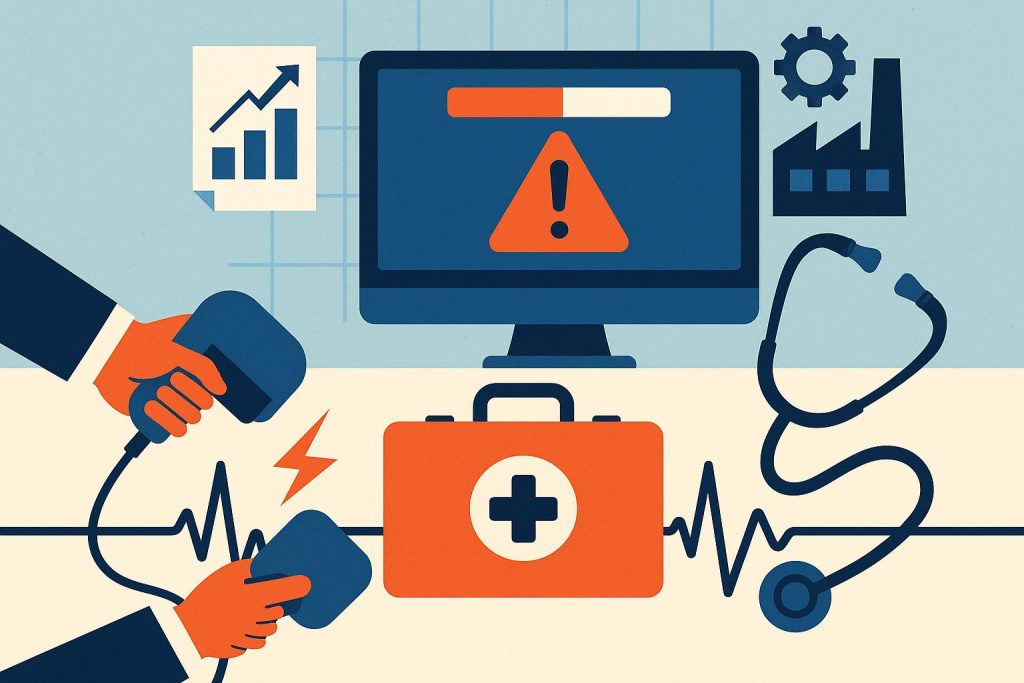
It is a quiet Tuesday morning when the project sponsor calls an emergency meeting. The new CRM system rollout, which was supposed to be the “silver bullet” for the sales team, is six months behind schedule and wildly over budget. The developers are pointing fingers at the business stakeholders, the stakeholders are frustrated with the slow progress, and the end users are threatening a full blown revolt. The project is coding, and not in the good way.
As a Senior Business Analyst with over a decade of experience in the trenches of IT projects, I have seen this movie too many times. I call it the “Sudden Death Phase” of a tech implementation. It is the moment when a project is teetering on the edge of failure, and the organization is ready to pull the plug and write off millions of dollars.
But before you call time of death on your failing project, you need a different kind of specialist. You do not need another coder or a new project manager. You need a Business Analyst (BA) to perform project triage.
In this article, we will explore why tech projects fail, how business analysts step in to save the day, and why having strong business analysis skills on your team is the best insurance policy against corporate sudden death.
The Anatomy of a Failing Tech Project
Why do so many software development projects end up on life support? It is rarely because the technology itself is flawed. More often, the failure stems from a disconnect between what the business needs and what the technical team is building.
Here are the most common symptoms I see when a project is flatlining:
1. The Moving Target (Scope Creep)
Scope creep is the silent killer of project management. It happens when new features, requirements, or changes are added without adjusting the timeline or budget. What started as a simple data migration project morphs into a complex system integration nightmare. Without strict requirements management, the project loses its focus and its way.
2. The Telephone Game (Poor Communication)
Have you ever played the game “Telephone”? One person whispers a message, and by the time it reaches the end of the line, it is completely garbled. This happens constantly in software development. The business stakeholders speak in terms of ROI and process efficiency. The developers speak in terms of APIs, databases, and code structure. If no one is translating between these two groups, the end product will never match the initial vision.
3. Solving the Wrong Problem
This is perhaps the most tragic reason for project failure. An organization spends millions building a sophisticated solution, only to realize it does not address the actual root cause of their business problem. They built a faster horse instead of inventing the automobile.
4. Ignoring the End User
A system can be technically perfect, but if the end users find it confusing or unhelpful, they simply will not use it. Low user adoption is the final nail in the coffin for many tech implementations.
Enter the Business Analyst: The Master of Project Triage
When a project hits the critical list, a skilled Business Analyst acts like an emergency room doctor. Our job is not to build the solution; our job is to diagnose the problem, stabilize the patient, and chart a course to recovery.
Here is how we perform project triage:
Step 1: Stop the Bleeding (Assess the Current State)
The first thing a BA does is hit the pause button. We cannot fix a moving target. We need to understand exactly where the project stands right now.
- Requirements Audit: We review the original business requirements document (BRD). What did the business actually ask for? How much of that has been built?
- Stakeholder Interviews: We talk to everyone involved. We interview the project sponsors to understand their frustrations. We talk to the development team to understand their roadblocks. Most importantly, we talk to the end users to see what they are struggling with.
- Gap Analysis: We identify the gaps between the current state of the project and the desired business outcomes.
Step 2: Clear the Airways (Re-establish Communication)
If poor communication is choking the project, the BA acts as the essential bridge between the business and IT.
- Translation Services: We take the technical jargon and translate it into clear business terms for the stakeholders. We take the business needs and translate them into precise, actionable user stories for the development team.
- Facilitated Workshops: We bring the warring factions together in a structured environment. We use techniques like process mapping and brainstorming to get everyone on the same page and working toward a common goal.
Step 3: Treat the Root Cause (Redefine the Scope)
Once we understand the true problem and have everyone talking again, it is time to perform surgery on the project scope.
- Prioritization: We cannot build everything at once, especially on a failing project. BAs work with stakeholders to prioritize features based on business value. What is the Minimum Viable Product (MVP) we can deliver to show immediate progress?
- Requirements Gathering (Take Two): Sometimes, the original requirements were just wrong. We use techniques like use cases and prototyping to ensure we are finally solving the right problem.
- Managing Scope Creep: We put strict change control processes in place. Any new request must be evaluated for its impact on the timeline and budget before it is approved.
Step 4: Monitor Vitals (Ensure Quality and Adoption)
The BA’s job is not done once the coding restarts. We stay involved to ensure the project stays healthy.
- User Acceptance Testing (UAT): BAs often lead the UAT process. We make sure the system actually works for the people who will use it every day. We write test cases based on real world scenarios, not just technical specifications.
- Change Management: Implementing a new system means changing how people work. BAs help design training programs and communication plans to ensure smooth user adoption. We understand that a project is only successful if people actually use the new tool.
The ROI of Strong Business Analysis
You might be thinking, “This sounds great, but we cannot afford to add another person to the project team.”
My response is: You cannot afford not to.
The cost of a failed tech implementation is staggering. It is not just the wasted money on software licenses and development hours. It is the lost productivity, the damaged morale, and the missed business opportunities.
A skilled Business Analyst pays for themselves many times over by:
- Reducing Rework: By getting the requirements right the first time, BAs prevent developers from building the wrong features, saving countless hours of coding and testing.
- Accelerating Delivery: By prioritizing the most valuable features and managing scope creep, BAs help projects deliver ROI faster.
- Ensuring User Adoption: By focusing on the end user experience, BAs ensure the system is actually used, turning an IT expense into a business asset.
Building Your Internal Triage Team
The best way to handle project triage is to prevent the project from failing in the first place. This means integrating strong business analysis practices from day one.
If you are seeing the warning signs in your own projects—missed deadlines, confused stakeholders, or a growing backlog of untested features—it might be time to upskill your team.
Empowering your existing staff with the right tools and techniques can make all the difference. Investing in comprehensive training is a crucial step. A solid foundation in requirements elicitation, process modeling, and stakeholder management can transform a struggling project manager or subject matter expert into a highly effective BA.
If you want to build this capability within your organization or elevate your own career, consider looking into specialized training. A comprehensive Business analyst course can provide the practical skills needed to diagnose project issues, facilitate clear communication, and ultimately save your tech implementations from corporate sudden death.
Conclusion
Tech projects do not fail because of bad technology; they fail because of bad communication, unclear requirements, and a disconnect from business goals.
When a project is on the brink of disaster, you need someone who can see the big picture, understand the technical details, and bring everyone together to find a solution. You need a Business Analyst to perform project triage.
Do not wait until the patient is flatlining. Recognize the value of business analysis and give your projects the best chance of survival.